
The VetPrac Nurse & Tech Online Conference
Online Presentations, Discussions & Workshops
Quality education without leaving home. Slippers optional.
Learn More About the Conference Experience
Proudly Partnered With



Is This Conference For You?
15+ Knowledge Packed Sessions
Covering emergency and critical care, anaesthesia, surgery, rehabilitation, nutrition, exotics, wildlife and more. You’ll have the opportunity to learn across a broad range of clinical topics, all delivered by experienced veterinary nurses, technicians and veterinary professionals.
Learn on Your Schedule - TIER 1
All presentations are pre-recorded, allowing you to watch them at a pace that suits you over the conference weekend. Pause, rewind and revisit key concepts, giving you the flexibility to fit your learning around work, family and life.
Extend Your Learning - TIER 2
Want to join the discussion? Select TIER 2 to include the live experience. There are two live case studies and discussions to choose from each day, giving you the opportunity to learn from real clinical scenarios and engage with the educators.
Please note: Live case studies and discussions are live-only sessions and will not be recorded. You’ll need to be available at the scheduled time to participate.
Extend Your Learning - TIER 3
Want to get hands-on? Select TIER 3 to add a live practical workshop of your choice. Your ticket includes everything above, plus one interactive workshop. Two of the hybrid workshops include a practical kit delivered to your door, so you can put your learning into practice from home.
Please note: Live practical workshops are live-only sessions and will not be recorded. You’ll need to be available at the scheduled time to participate.
Online Workshop Options (Hybrids)
Available with TIER 3 Ticket Purchases

Suturing Lab
12 Spots Only
7th November 2026
Hands-on learning. From instrument handling to knots & patterns. Learn alongside us with a convenient kit sent directly to your home or clinic.
Kit provided by B.Braun.

Intro to Anaesthesia Monitoring
8 Spots Only
7th November 2026
Real anaesthesia case simulations. Step through anaesthetic monitoring and troubleshooting in real time with this interactive small group workshop.
Interactive case simulated.

Blood Pressure
8 Spots Only
8th November 2026
Experience non-invasive blood pressure measurement with a genuine Doppler device (BP kit provided on loan with prepaid return shipping). Participate live in patient cases & receive real-time troubleshooting assistance.
Kit provided by Genia.

In-depth Anaesthesia Monitoring
8 Spots Only
8th November 2026
Work through in-depth monitoring scenarios with time to think critically. Build the skills to call it under pressure.
Interactive case simulated.
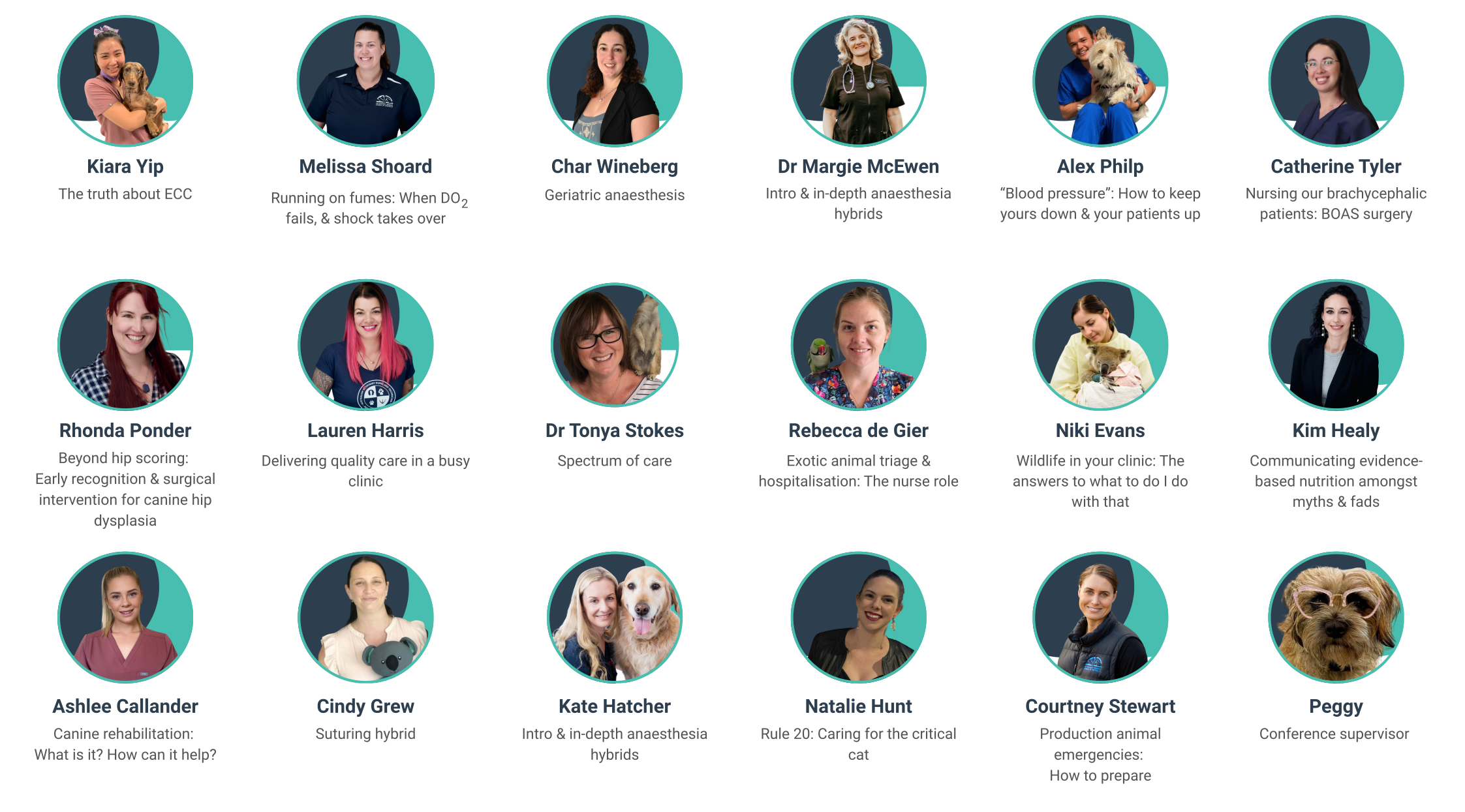
Conference Educators & Lectures
Live Case Studies Options
Available with TIER 2 & TIER 3 Ticket Purchases

Anaesthesia
7th November 2026
5pm – 6pm
Live Anaesthesia Case Study
Educators: Char Whineberg & Alex Philp

Patient-centred Care
7th November 2026
5pm – 6pm
Live Workflow Case Study
Educators: Dr Tonya Stokes & Lauren Harris

Production Animals
8th November 2026
5pm – 6pm
Live Production Animals Case Study
Educator: Courtney Stewart

Exotics
8th November 2026
5pm – 6pm
Live Exotics Case Study
Educator: Rebecca De Gier & Niki Evans
Conference Starts In:
Payment Options
Watch every session across the two days.
What’s included in this ticket?
- Over 15 sessions
- 15 CPD Points
- Access for two full days
- Watch the recordings when it suits you
Access only on the 7th & 8th November 2026
Tier 1 PLUS 3 months access to recordings and participate in 2 x live case studies.
What’s included in this ticket?
- Over 15 sessions
- 17 CPD points
- 3 months access to recordings
- Notes and live Q&A
- 2 live case studies of your choice
Access ends after 8th February 2027
Tier 2 PLUS one online workshop. (Limited Spots Available in each Workshop).
What’s included in this ticket?
- Everything in Tier 2
- 1 Online Workshop
- 19 CPD points
- Kit posted to you (for Suturing & Blood Pressure Hybrids)
- Postage within Australia only
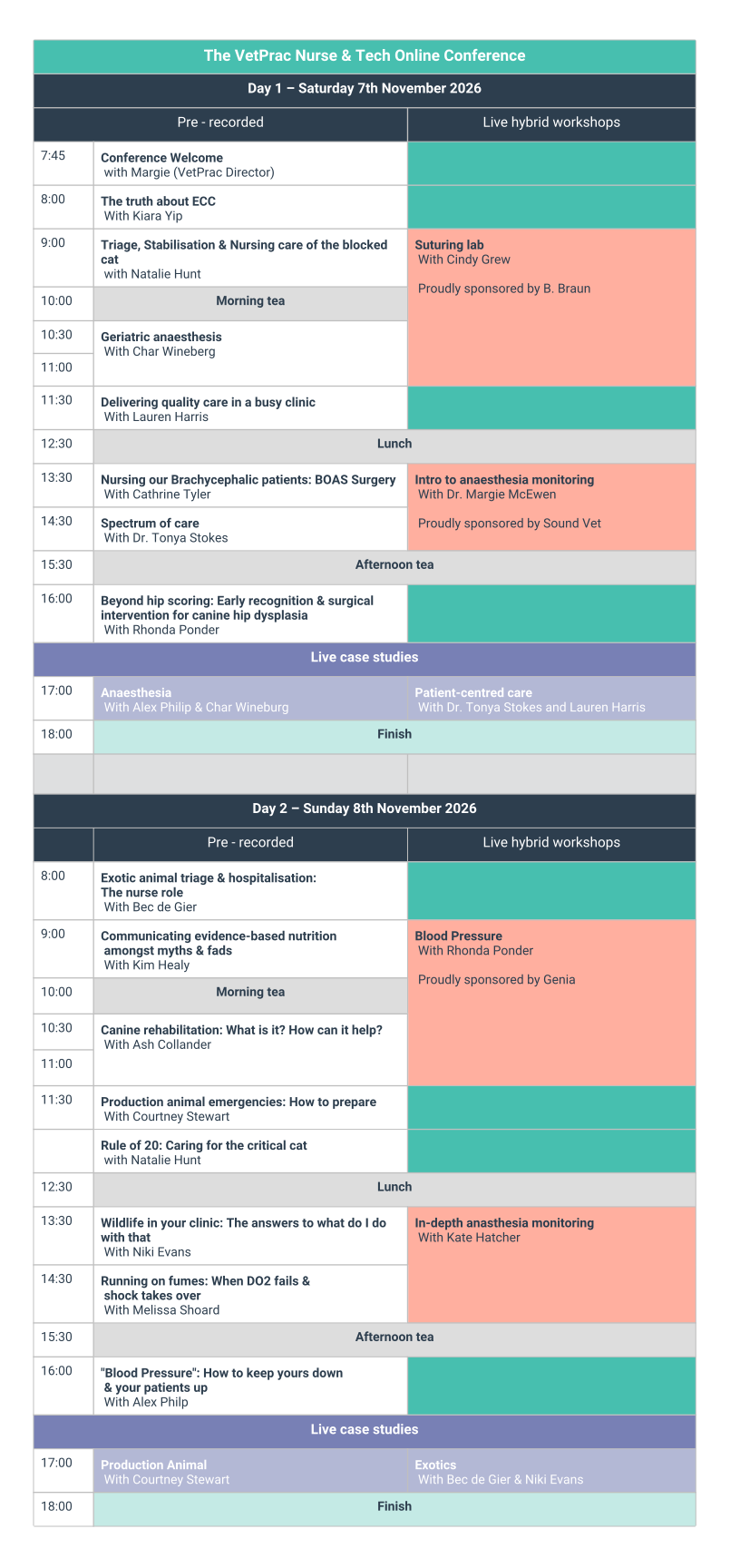
Saturday’s Line Up
Sunday’s Line Up
The truth about ECC
Kiara Yip
Gain a practical understanding of what constitutes a true veterinary emergency and the vital role nurses and technicians play in emergency and critical care (ECC) case flow. This session will build your confidence in recognising emergency presentations across all body systems, preparing you for the fast-paced expectations of ECC practice and the patients who need you most.
Exotic animal triage & hospitalisation – the nurse role
Bec de Gier
Expand your nursing skills with practical techniques for caring for birds, reptiles, small mammals, and fish, while gaining confidence in recognising the subtle signs of illness that make exotic patients so challenging. Learn how species-specific handling, monitoring, nutrition, fluid therapy, environmental management, and effective client communication all contribute to better patient outcomes and long-term welfare.
Triage, stabilisation & nursing care of the blocked cat
Natalie Hunt
Uncover the essentials of nursing feline urethral obstruction, from rapid triage and stabilisation through to assisting with urinary catheter placement and providing exceptional in-hospital care. You’ll also learn practical strategies for educating clients on diet, environmental enrichment, and behavioural management to help reduce the risk of re-obstruction and improve long-term feline well-being.
Under the influence: communicating evidence-based nutrition amongst myths and fads
Kim Healy
Separate nutrition fact from fiction as you explore the most common myths and misconceptions encountered in companion animal practice. Build the confidence to have evidence-based nutrition conversations with clients and apply practical nutritional knowledge to support better patient outcomes and long-term client compliance.
Geriatric anaesthesia
Char Wineberg
Provide safer anaesthesia for senior cats and dogs by understanding the age-related physiological changes and common co-morbidities that influence anaesthetic risk. This session will equip you with practical strategies for pre-anaesthetic assessment, tailored anaesthetic management, monitoring, recovery, and low-stress nursing techniques to optimise outcomes for geriatric patients.
Canine rehabilitation: What is it? How can it help?
Ash Collander
Discover how rehabilitation can transform recovery and long-term quality of life for canine patients, while debunking common myths surrounding pain, rest, surgery, and mobility. Through practical demonstrations, you’ll learn simple rehabilitation techniques, safe patient handling, supportive care strategies, and how veterinary nurses and technicians can make a meaningful impact from the very first day of recovery.
Delivering quality care in a busy clinic
Lauren Harris
Take control of the surgical schedule with practical strategies to improve efficiency, streamline workflow, and keep your team working seamlessly throughout the day. Learn how to anticipate and adapt to unexpected changes while maintaining excellent patient care and creating a calmer, more productive surgical environment.
“Blood pressure”
How to keep yours down and your patient’s up
Alex Philp
Gain the confidence to recognise, assess, and manage hypotension during anaesthesia using a practical, step-by-step approach. This session explores the physiology behind blood pressure and perfusion, common causes of hypotension, and evidence-based treatment strategies to help you make informed decisions and improve patient safety.
Nursing our brachycephalic patients: BOAS surgery
Cathrine Tyler
Gain the knowledge and practical skills to confidently nurse brachycephalic patients through every stage of anaesthesia, from pre-operative assessment to recovery. Learn to recognise the risks and clinical signs of BOAS, implement low-stress handling techniques, and apply effective airway management strategies to improve patient safety and outcomes.
Wildlife in your clinic: The answers to what do I do with that
Niki Evans
Take the uncertainty out of wildlife emergencies by learning a practical, step-by-step approach to triage, handling, stabilisation, and decision-making for native wildlife patients. From the first phone call and reception assessment through to safe housing and referral, this session will give you the confidence to provide appropriate initial care and make informed decisions for wildlife presenting to your clinic.
Spectrum of care
Tonya Stokes
Explore how the Spectrum of Care framework can help veterinary teams provide practical, compassionate care when financial, logistical, or social barriers affect clinical decision-making. This session will equip you with strategies for tiered treatment planning, stigma-free client communication, and the integration of Spectrum of Care principles into everyday practice and veterinary education to improve both patient outcomes and team well-being.
Running on fumes: When DO₂ fails, and shock takes over
Melissa Shoard
Build the confidence to recognise and respond to shock before it becomes irreversible by understanding the physiology behind tissue perfusion and oxygen delivery. This practical session will guide you through the different types and stages of shock, helping you rapidly assess patients, classify their condition, and apply appropriate stabilisation and treatment strategies in small animal practice.
Beyond hip scoring: Early recognition & surgical intervention for canine hip dysplasia
Rhonda Ponder
Develop a practical understanding of canine hip dysplasia, from recognising the key risk factors through to supporting diagnosis and early intervention. This session will explore the veterinary nurse and technician’s role in assisting with diagnostic imaging and surgical procedures designed to treat or manage hip dysplasia in growing dogs.
Emergencies with production animals
Courtney Stewart
From dystocia and traumatic injuries to toxicities and down animals, production animal emergencies can be challenging and unpredictable. Join Courtney Stewart (VTS) for a practical session designed to build confidence in recognising critical patients, triaging calls, providing essential nursing support, and contributing to successful outcomes in the field and clinic.
Rule of 20: Caring for the critical cat
Natalie Hunt
Develop the confidence to recognise and respond to critically ill patients, with a focus on feline emergencies, using a structured approach to triage, stabilisation, and ongoing monitoring. Learn how to apply Kirby’s Rule of 20 alongside effective communication, patient advocacy, and critical care nursing principles to deliver exceptional care when every minute matters.